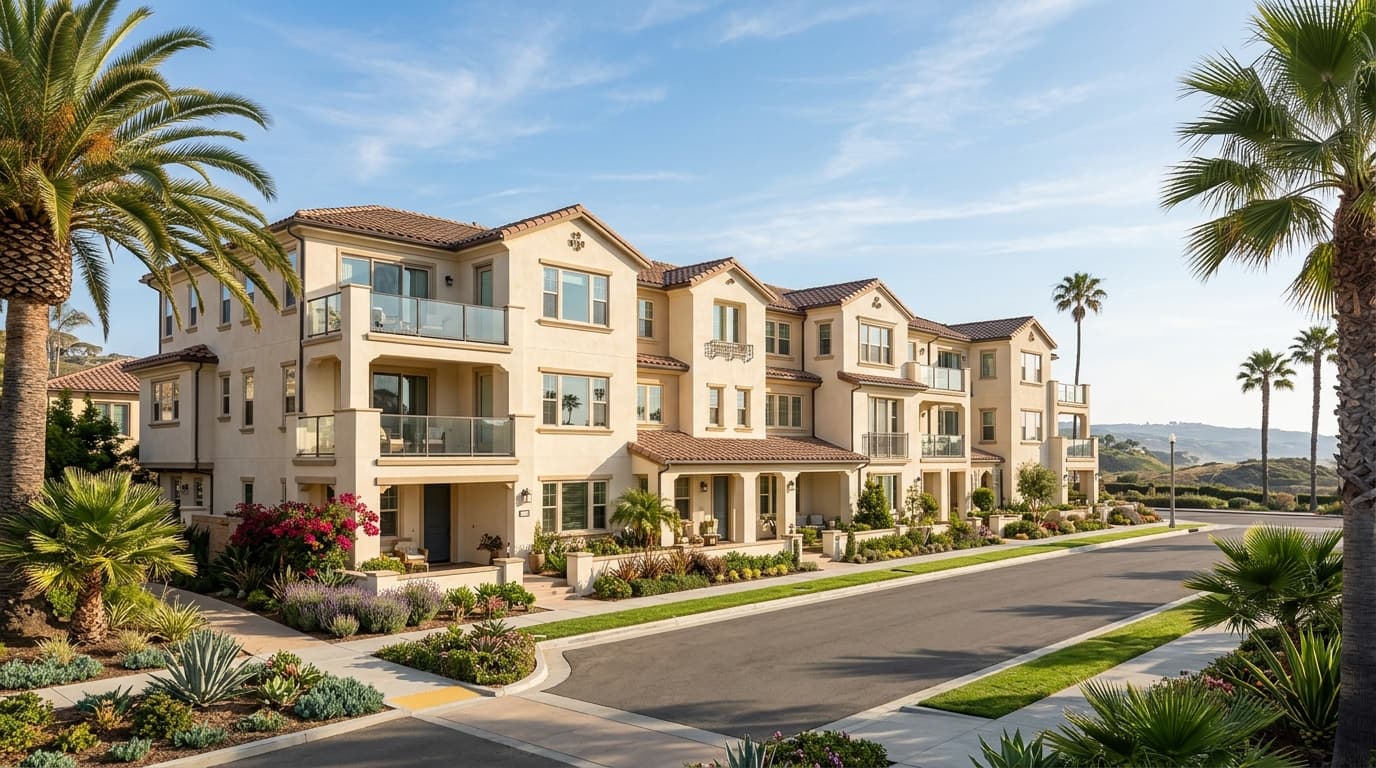
Real Estate Investing 101: Getting Started
By Yuanming Mao, DRE #02242767 · Navigators Real Estate, Inc.
Cap rate, cash-on-cash return and equity growth explained for first-time investors and professionals underwriting Southern California property.
Real estate rewards patience and arithmetic. For high-earning professionals and first-time investors, the appeal is easy to see: a tangible asset, potential income and long-term equity growth. The risk is buying on enthusiasm and discovering later that the numbers never worked.
This guide covers the core measures we use to underwrite a Southern California investment before anyone talks about offers. None of it requires advanced math, only discipline and honest assumptions.
Begin With the Goal
Investors typically want one or more of three things: monthly cash flow, long-term appreciation, or tax-aware wealth building. These goals pull in different directions. Higher-priced coastal and foothill markets often lean toward appreciation and stability, while cash flow can be thinner. Decide which outcome matters most before comparing properties.
Understanding Cap Rate
The capitalization rate measures a property's income relative to its price, independent of financing.
Cap rate = net operating income / purchase price
Net operating income is rental income minus operating expenses such as taxes, insurance, maintenance, management and vacancy allowance. It excludes mortgage payments.
Hypothetical example: a property is purchased for 1,000,000 dollars and produces 40,000 dollars of net operating income in a year. Its cap rate is 4 percent. A lower cap rate often signals a market where buyers accept less current income in exchange for expected stability or growth.
Understanding Cash-on-Cash Return
Cash-on-cash return looks at the income your actual invested cash produces after debt service.
Cash-on-cash = annual pre-tax cash flow / total cash invested
Total cash invested includes the down payment, closing costs and any immediate repairs. Hypothetical example: if an investor puts 400,000 dollars into a purchase and the property produces 12,000 dollars after mortgage payments in a year, cash-on-cash is 3 percent.
In higher-cost submarkets like Irvine and Arcadia, where approximate medians are roughly 1.68 million and 2.15 million dollars, large down payments can make this figure modest. That is not necessarily a flaw. It is a reason to understand what else the investment is meant to deliver.
Equity Growth: The Quieter Return
Equity builds in two ways: the loan balance falls as payments are made, and the property's value may rise over time. Neither is guaranteed. Values can fall as well as rise, so a sound plan should still work if appreciation is flat for a period.
Stress-Test Before You Buy
Prudent underwriting asks what happens when conditions get worse:
- Vacancy lasts longer than expected.
- Repairs exceed the reserve.
- Interest rates change at refinance or on an adjustable loan.
- Property taxes and insurance reset higher after purchase.
- Rents stay flat while expenses rise.
If the investment still holds up under a cautious scenario, you are in far stronger shape than if it only works under the best case.
Common First-Time Mistakes
- Underestimating reserves for vacancy and repairs.
- Using projected rents that are not supported by comparable listings.
- Ignoring local rent regulations and landlord obligations, which your attorney should review.
- Mixing a personal residence plan with an investment plan without clear numbers.
- Skipping a professional inspection on a rental.
Use Local Evidence, Not Headlines
Rental income should be supported by comparable listings, not by optimistic assumptions. Review recent leases for similar homes, note how long they stayed on the market, and speak with a property manager if you are unsure. Evidence of real demand in a specific neighborhood is worth more than any general forecast, and it keeps your underwriting honest from the first day.
Next Step
If you are a first-time investor or a high-earning professional exploring real estate, we invite you to book a private advisory consultation with Yuanming Mao Private Real Estate Advisory. We will help you define your goal, underwrite specific opportunities in South Orange County or the San Gabriel Valley, and build a strategy you can explain to your CPA and your family with confidence.
This article is general education only and is not legal, tax, or lending advice. Consult your attorney, CPA, or lender for your situation.
Need an analysis calibrated to your property?
Request a confidential discussion with a specific decision framework.